
Where Should a Porta Potty Go on My Property?
Pick flat, firm ground first. ADA Standards section 302.1 calls for surfaces that are stable and slip resistant, and that rule of thumb helps on gravel or grass too, not just accessible units. A standard porta potty rental sits about 44 by 48 inches on the ground and stands roughly 92 inches tall, so give it clearance from tree branches and fence lines. Keep the unit within reach of a service truck; our drivers need a clear path in, and anything blocking that path (parked cars, a locked gate, a flower bed) delays cleaning. If you are near a construction footprint, match placement to where crews actually work, not just where it looks tidy, and pair it with the rest of your construction site services planning. For multi-unit setups, ADA Standards section 213.2 requires at least one accessible unit in any cluster, and never fewer than one even if the math rounds down. Check our porta potty placement guide companion, the rental checklist, before delivery day so nothing gets moved twice. Homeowners doing a remodel should also look at home renovation porta potty setups, since driveway space is usually tighter than a job site, and anyone weighing an ada accessible porta potty unit should measure the door swing before delivery day.
What Are the Clearance and Access Rules?
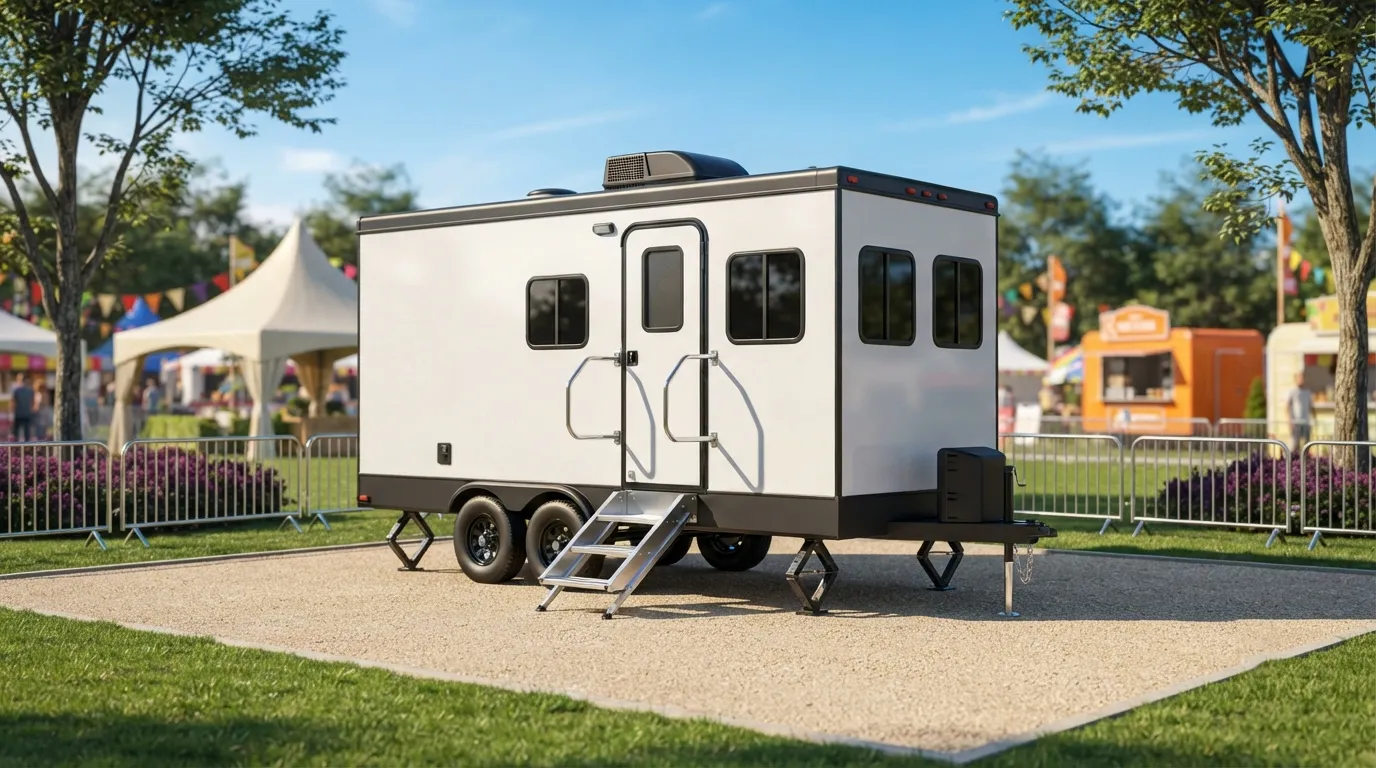
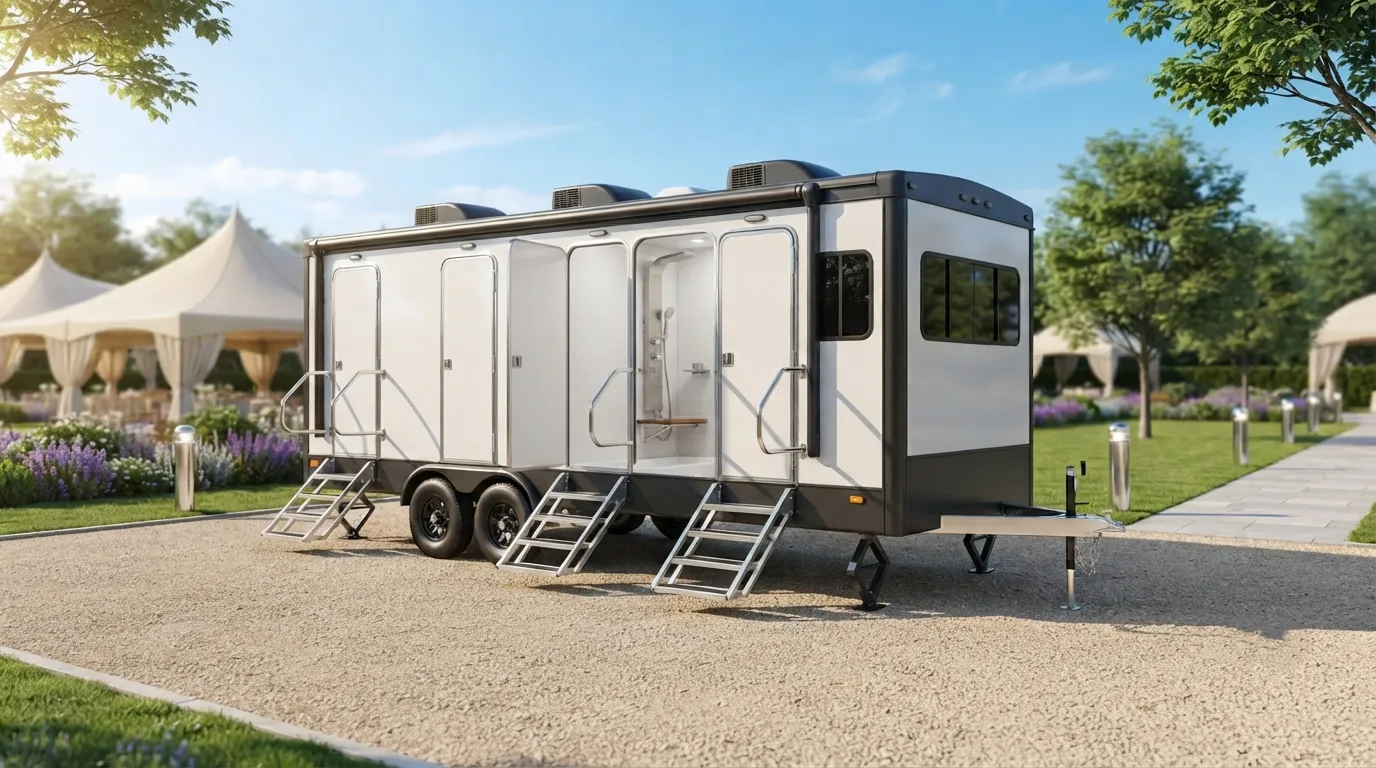
Plan for 36 inches of clear path to any accessible unit under ADA Standards section 403.5.1, and 32 inches at the door itself per section 404.2.3. Those numbers matter even on private sites, because they are the easiest way to guarantee a wheelchair or walker fits through without a shove. If you are renting a restroom trailer rental instead of a standalone unit, the trailer needs level, compacted ground and a hookup path that does not cross a slope steeper than 1:12, which mirrors ADA ramp guidance under section 405.2, a detail worth checking whether you are booking a 2 stall restroom trailer or a larger 4 stall restroom trailer. Roll-off placement has its own footprint: a roll-off dumpster rental needs about 60 feet of straight clearance behind the truck for a clean drop, so a short driveway in a Arlington Heights neighborhood may need the container staged at the curb instead, whether you are working from dumpster sizes and dimensions for a small cleanout or a full construction dumpster rental. That is also where dumpster placement permit cost questions come up, since curb placement in the right of way is a different situation than a driveway drop, and it needs confirming with the city before delivery. We do not have a local permit fee to quote here, so check with the city rather than guessing.
Do I Need a Permit for Placement?
Sometimes, and it depends on where the unit or container lands, not what it is. Driveway and yard placement on private property usually does not trigger anything. Curbside or right-of-way placement is the gray area, and that includes both portable restrooms during street events like a festival restroom rental and any dumpster placement permit situation tied to a construction dumpster. We have not verified a specific Arlington Heights ordinance number for this, so confirm with the city before you commit to a curb spot. Our dumpster permit requirements page and porta potty permit requirements page both walk through what to ask the city when you call. If your event is farther out, like a site near Mount Prospect 3.7 miles southeast or Palatine 4.6 miles west, the same rule applies: local right-of-way rules vary by town, so do not assume Arlington Heights answers carry over.
How Many Units Do I Need and Where Should They Cluster?
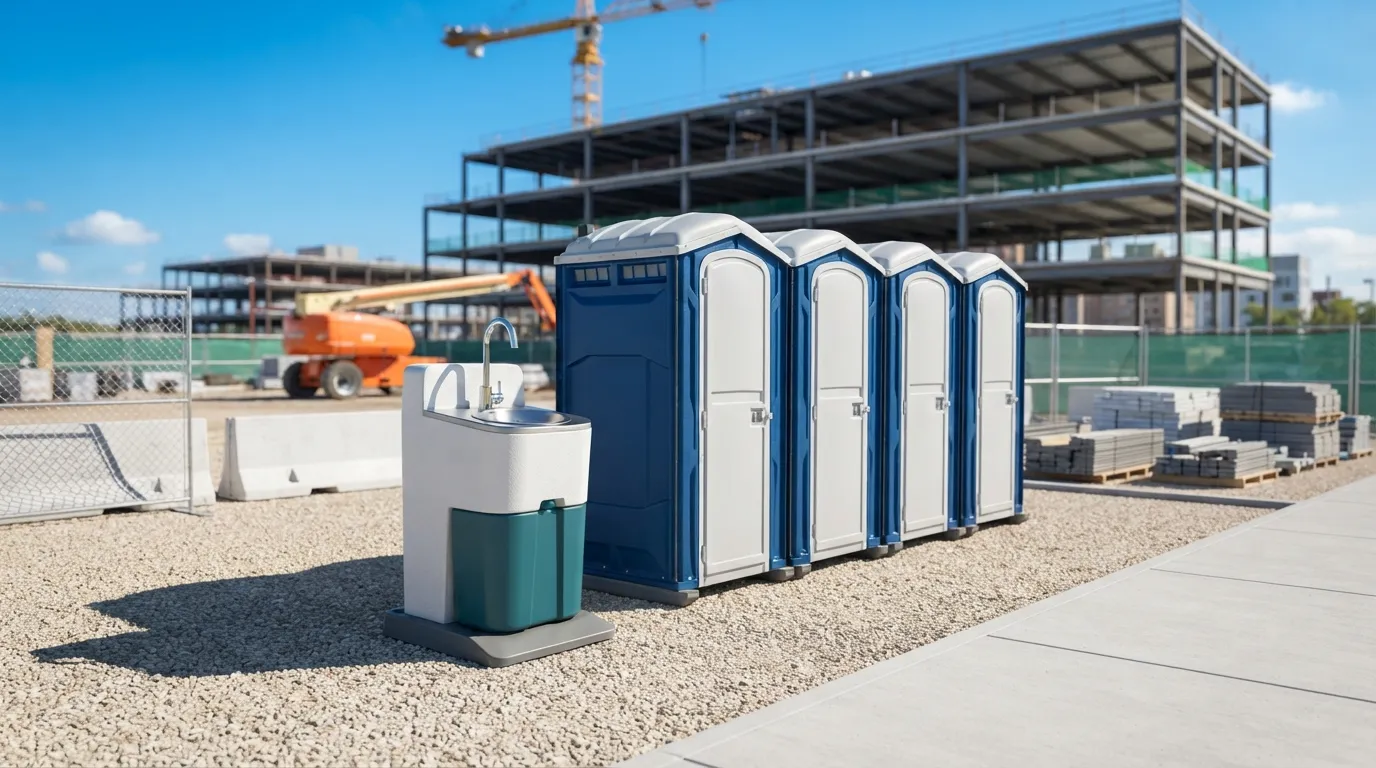
Placement and headcount are the same decision, really. OSHA 1926.51(c)(1) sets ratios for construction sites: one toilet for 20 workers or fewer, then one toilet and one urinal per 40 workers as the crew grows past that, and one per 50 once you hit 200 workers or more. Cluster units near the break area, not the far corner of the lot, so workers actually use them instead of skipping the walk. Our how many porta potties do i need guide breaks the math down by headcount and shift length, and the full osha portable toilet requirements page covers the ratio rules in more depth. For events, ANSI/PSAI Z4.3 sets a baseline service interval of once a week for up to 10 users over a 40-hour week, which tells you how tight your cluster spacing should be if servicing happens mid-event, a detail that matters as much for a wedding restroom rental as it does for a concert restroom rental. If your setup includes a handwashing station rental, place it right next to the restroom cluster, not off to the side; 29 CFR 1910.141(d)(2) requires soap and towels or a hand-drying device at any washing station, and hand sanitizer alone does not satisfy that. Crews using paints, coatings, or pesticides on site trigger a different rule, OSHA 1926.51(f)(1), which specifically covers washing after those contaminants. If you are running a portable sink rental and a part breaks mid-job, an Ozark River portable sink replacement parts search usually turns up faucet and pump kits that fit most standard models, though we recommend checking with your rental provider first rather than guessing at compatibility, and a hand sanitizer station rental can fill the gap while a sink is out of service.
Where does a mobile office trailer fit into placement planning?
A mobile office trailer rental needs the same clearance logic as a restroom trailer: level ground, a straight approach, and enough width for the door swing. If a trailer door gets damaged on site, mobile office trailer replacement doors are a common repair request, and it is worth flagging early so the unit does not sit out of service.
How much does a standard porta potty rental cost per day?
A standard unit typically runs $100 to $350 a day depending on demand and duration. Weekly and monthly rates drop the per-day cost substantially. See porta potty rental cost for the full breakdown by term, and compare the porta potty rental per day rate against a monthly porta potty rental before you commit.
Can I place a porta potty on the street instead of a driveway?
Only with city confirmation. Right-of-way placement is not something we can quote a fee for without checking, since Arlington Heights permit rules were not verified for this page. Call the city first.
Does septic pumping placement matter the same way?
Yes. The pump truck needs clear access to the tank lid, similar to roll-off clearance needs. A residential tank is typically pumped every 3 to 5 years; see septic pumping service for scheduling.
Is placement different for a farm or agricultural site?
Yes. OSHA 1928.110 requires field sanitation facilities within a quarter mile walk of hand-labor employees, one per 20 workers. See farm and agricultural restrooms for setup details.
Next step
Get a delivery date
Tell us the address, the dates and the headcount. We size the order and confirm the route.