What Makes an ADA Porta Potty Rental ADA Compliant?
Compliance comes down to space and reach, not just a bigger box. ADA Standards section 404.2.3 sets a minimum clear door opening of 32 inches, wide enough for most wheelchair frames to pass without scraping a knuckle. Inside, ADA Standards section 304.3.1 requires a 60 inch turning circle so a user can rotate a chair fully before transferring. The approach matters too: ADA Standards section 403.5.1 calls for a 36 inch clear route leading to the door, and the ground under that route has to be stable and slip resistant per ADA Standards section 302.1. Grab bars and flush handles fall under ADA Standards section 309.4, which means one hand, no tight grasping, and no more than 5 pounds of force to operate. Reach ranges follow ADA Standards section 308.2.1: 48 inches high at most, 15 inches low at minimum, so a seated user can reach the paper and hand sanitizer without straining. A standard unit runs about 44 by 48 inches on the ground; the ADA model is built larger to hold that turning space, which is why an ada-compliant porta potty rental costs more per week than a standard porta potty rental.
How Much Does Handicap Portable Toilet Rental Cost in Arlington Heights?
Pricing depends on how long you need the unit and whether delivery adds a flat fee.
| duration | low | typical | high |
|---|---|---|---|
| day | $200 | $230 | $400 |
| week | $120 | $185 | $240 |
Weekend rates for a short event run close to $240 to $300, based on measured jobs across the region. Delivery is usually billed separately, and that fee falls between $100 and $500 for a single-day drop, or $50 to $150 for a week-long rental, so ask Arlington Heights Porta Pros to quote delivery alongside the unit. If your job also needs a wash station, pair the order with a handwashing station rental rather than assuming the toilet trailer covers it. For longer jobs, check the monthly porta potty rental page, since a month-long ADA unit prices differently than a weekend rental and the per-day cost drops as duration climbs. Renters comparing every option should start with the full porta potty rental cost breakdown before locking in a duration.
Do Job Sites in Arlington Heights Need an ADA Unit?
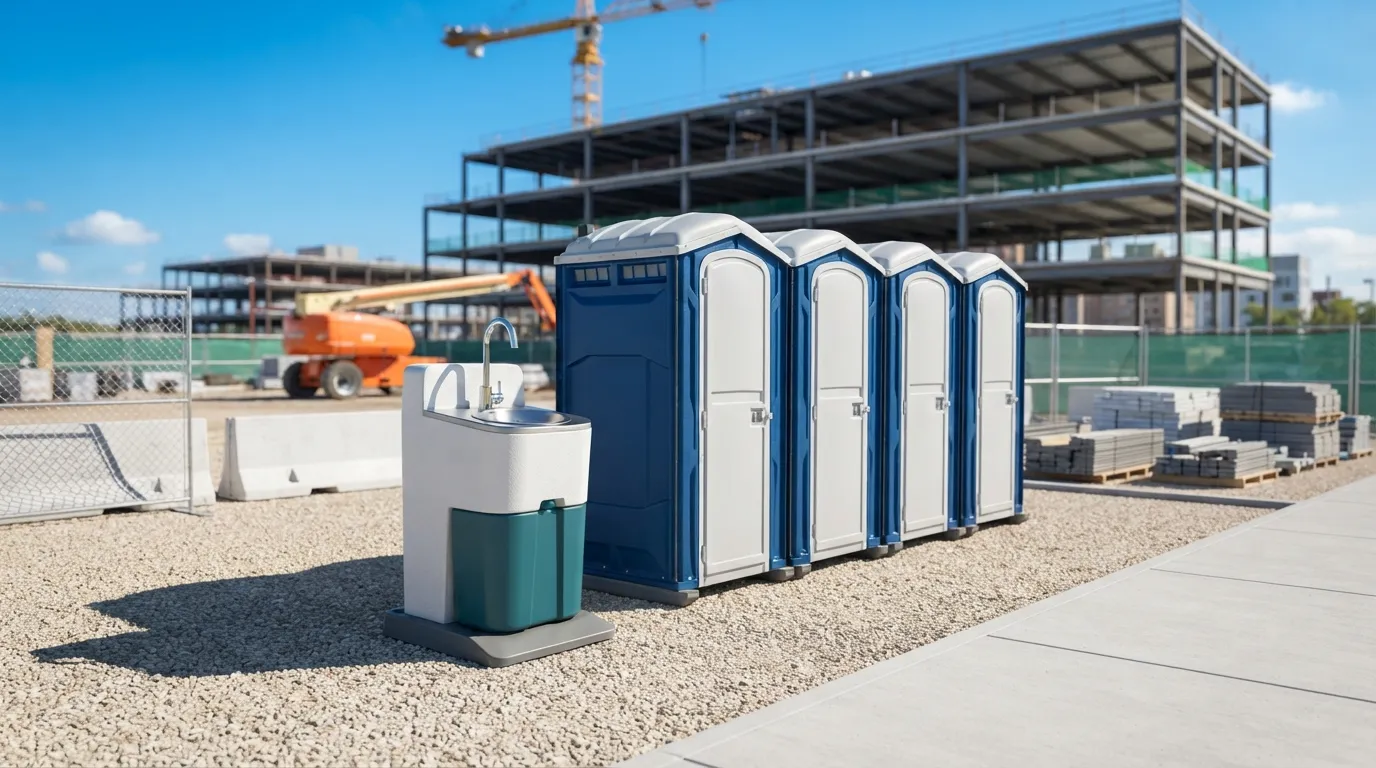
Any construction crew with a worker who needs accessible facilities should have one on site, and general contractors often order one ADA unit alongside a bank of standard toilets regardless of headcount. OSHA 1926.51(c)(1) sets the base ratio: one toilet for 20 workers or fewer, climbing to one seat and one urinal per 40 workers once the crew passes that threshold, and one per 50 once you hit 200 or more. That ratio governs total count, not accessibility, so the ADA unit is added on top rather than substituted in. ADA Standards section 213.2 is the rule that actually triggers the accessible unit: wherever single-user toilets are clustered, at least 5 percent of the group, and never fewer than one, has to be accessible. A five-unit bank at a build site near downtown Arlington Heights still needs one ADA stall under that rule. Water access matters too. OSHA 1926.51(a)(1) requires potable water at the site regardless of unit type, which is why most crews pair the toilet order with a portable sink rental rather than relying on hand sanitizer alone.
Where Should an Accessible Unit Be Placed?
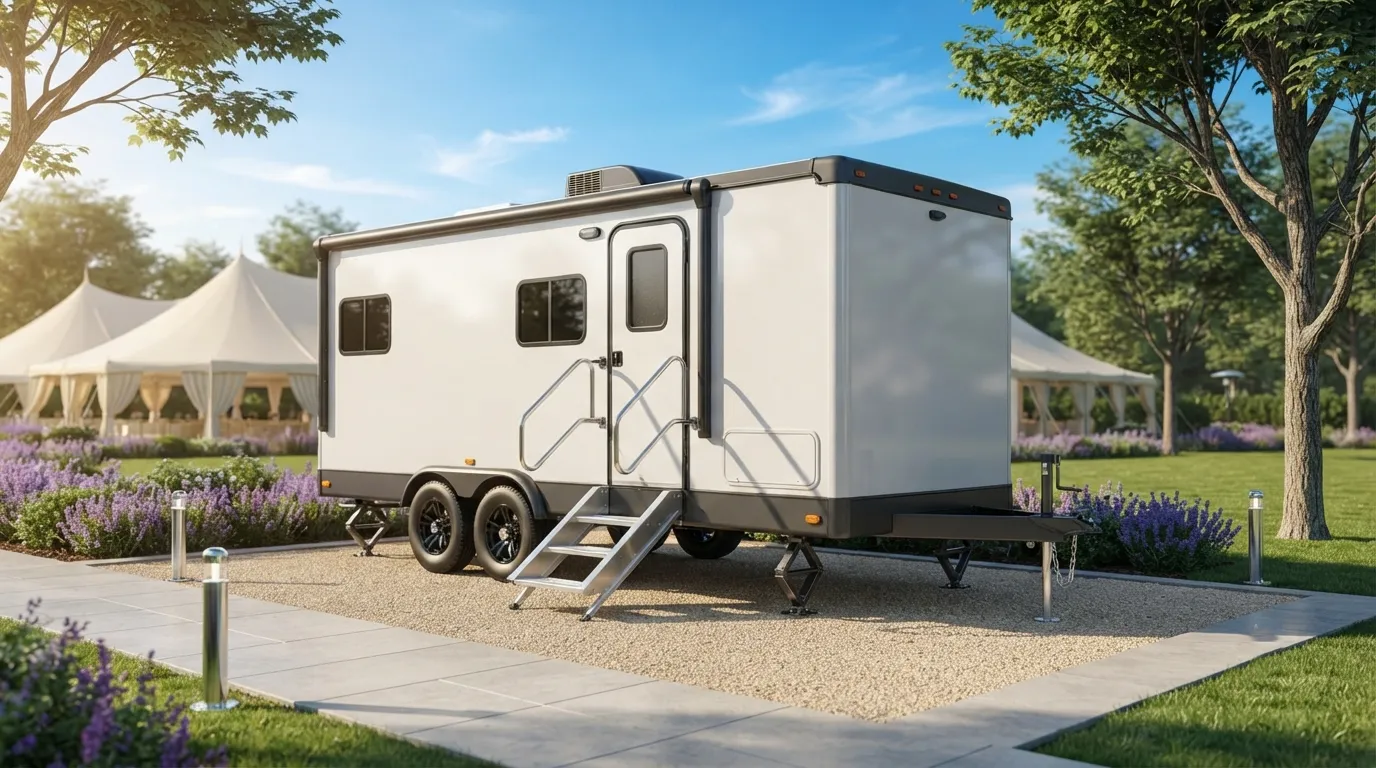
Placement decides whether the unit actually gets used. The approach path needs that 36 inch clear width the whole way, with no gravel lip or curb higher than a small threshold, since ADA Standards section 405.2 caps any ramp slope at 1:12. A unit dropped 6.1 miles north in Buffalo Grove faces the same requirement as one placed downtown, so distance from the yard changes delivery cost, not the placement rule. Crews near Mount Prospect, 3.7 miles southeast, and Palatine, 4.6 miles west, often request the ADA unit be set closest to the site trailer so the accessible route stays short. A roll-off delivery truck needs about 60 feet of straight clearance behind it, and the same clearance concern applies when the delivery truck for an ADA unit has to back into a tight urban lot in Arlington Heights. If the placement is in the public right of way, that needs confirming with the City of Arlington Heights before delivery day, since street and sidewalk rules vary by location and this page cannot state a blanket permit answer. For events with several accessible units needed across a large footprint, ada portable restroom trailers sometimes make more sense than several single units, and the 8 stall restroom trailer page covers layouts that build in accessible stalls from the start.
Is an ada porta potty rental different from a standard unit?
Yes. It is built wider to hold a 60 inch turning circle, has a 32 inch door instead of a narrower standard opening, and includes grab bars and lower-reach fixtures. A standard porta potty rental skips those features and costs less per week as a result.
How many ADA units does an event need?
At least 5 percent of your total clustered units, and never fewer than one, per ADA Standards section 213.2. A 20-unit event order needs a minimum of one ADA stall; larger orders scale from there.
Can I rent just one ADA unit for a small job?
Yes, single ADA units rent daily or weekly and do not require a matching order of standard units. Weekly pricing runs $120 to $240, and Arlington Heights Porta Pros can deliver one alone for a small renovation or private event.
Does an ADA porta potty need its own water line?
No, it works like a standard unit with a self-contained tank, though OSHA still requires potable water somewhere on site under OSHA 1926.51(a)(1), usually met with a separate handwashing station or sink.
What is the difference between an ADA unit and an ADA restroom trailer?
A single ADA unit is a standalone stall; ada portable restroom trailers house multiple stalls, including accessible ones, inside one climate-controlled structure. Trailers cost more but suit larger events better than scattering single units.
Next step
Get a delivery date
Tell us the address, the dates and the headcount. We size the order and confirm the route.