
What does OSHA require for handwashing on a job site?
The rule that gets misquoted the most is 1926.51(f)(1). It only kicks in where workers apply paints, coatings, herbicides or insecticides, or handle other harmful contaminants. It is not a blanket handwashing mandate for every job site in Arlington Heights. General sanitation, including toilet counts, falls under OSHA 1926.51(c), which sets ratios by crew size. If your crew is spraying coatings or treating for pests, you need washing facilities under (f)(1). If you are pouring concrete or framing, your obligation is toilets and potable water under 1926.51(a)(1), not a separate handwash station, though most contractors add one anyway. We pair handwashing station rentals with standard porta potty rental on most Arlington Heights builds so both boxes get checked without a second delivery.
General industry workplaces, meaning fixed facilities rather than construction sites, follow a different citation: 1910.141(c)(1)(i) for toilet ratios and 1910.141(d)(2) for washing facilities. That second rule is specific: soap and towels or a hand-drying device are required. Hand sanitizer alone does not satisfy it. If your Arlington Heights operation is a warehouse or a shop rather than a job site, that is the standard your inspector will cite.
Do hand sanitizer stations meet the requirement?
No. 29 CFR 1910.141(d)(2) calls for soap and running water or a hand-drying device, and sanitizer does not substitute for either. A hand sanitizer station rental is a fine supplement at an event entrance or a food line, but it will not satisfy an OSHA inspector checking washing facilities. For that, you need an actual portable sink rental with a soap dispenser and paper towels or an air dryer built in. We stock both types and can tell you over the phone which one your Arlington Heights site actually needs before you commit to either.
Farms are a separate case. Agricultural operations with hand-labor employees fall under 1928.110, which requires potable water, toilets, and handwashing facilities at one per 20 employees, located within a quarter mile walk of the work area. That is a tighter placement rule than most construction sites face, and it matters if you are running farm and agricultural restrooms during harvest season.
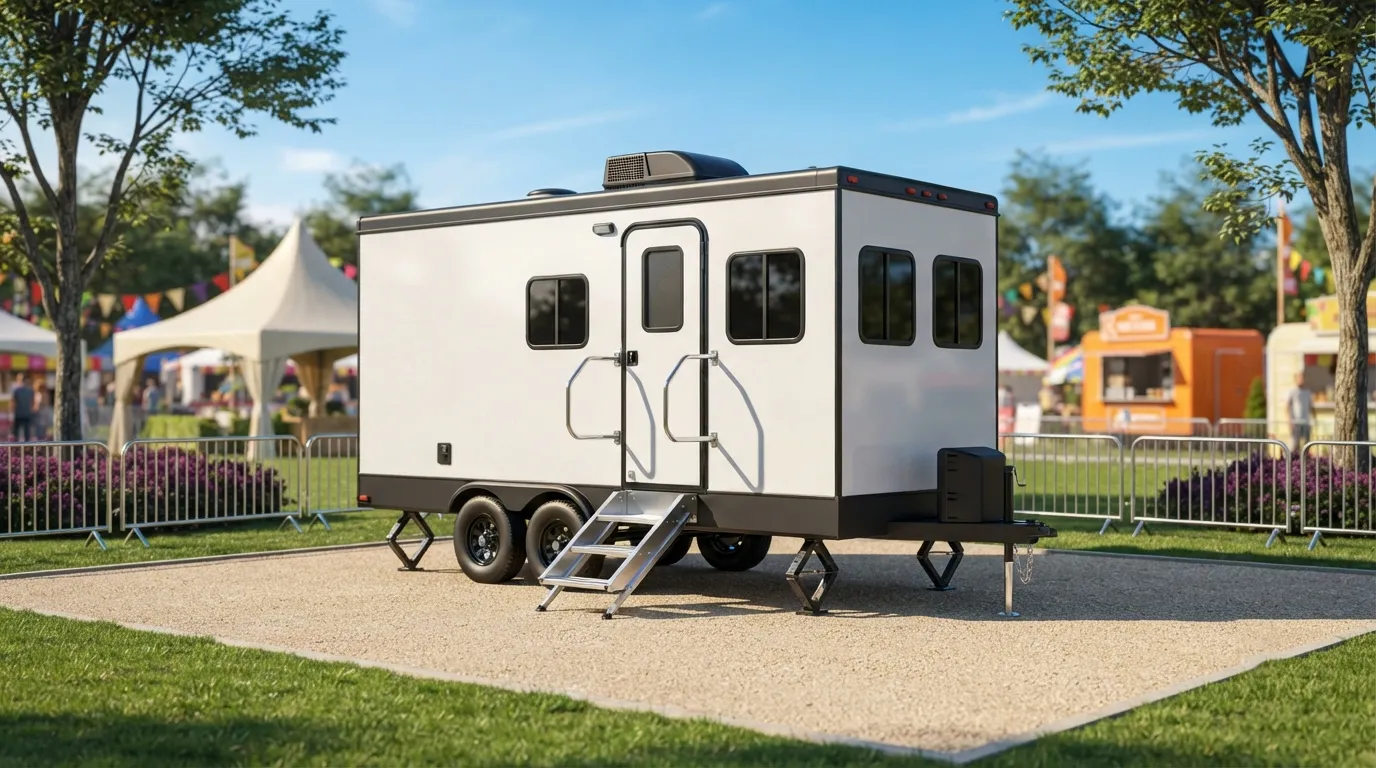
Where should handwashing stations go on site?
Put them next to the toilets, not across the lot. ANSI/PSAI Z4.3 sets the baseline service interval for portable sanitation at once a week for up to 10 users over a 40 hour week, and a handwashing station gets serviced on the same visit as your toilets when they are placed together. That saves you a second service fee. If you are staging an event, event restroom rental packages typically bundle a wash station per every two or three toilets, which keeps lines moving and keeps the units in usable shape between visits.
For ADA compliance, cluster placement matters too. ADA Standards 213.2 requires that at least 5 percent of clustered single-user toilet units be accessible, with a minimum of one, and the same logic applies to the handwash unit serving that cluster: it needs a clear approach. ADA Standards 403.5.1 sets a 36 inch minimum clear width for the route to get there, and 308.2.1 caps the forward reach for the soap dispenser and faucet controls at 48 inches high. If you are placing an ADA accessible porta potty on an Arlington Heights site, plan the wash station into that same accessible path rather than bolting it on afterward.
Placement in the public right of way in Arlington Heights needs confirming with the city before delivery; we do not guess on that and recommend you check with the city rather than assume a driveway or curb apron is fair game. Our porta potty placement guide covers the ground-level factors, like clearance and slope, that apply regardless of jurisdiction.
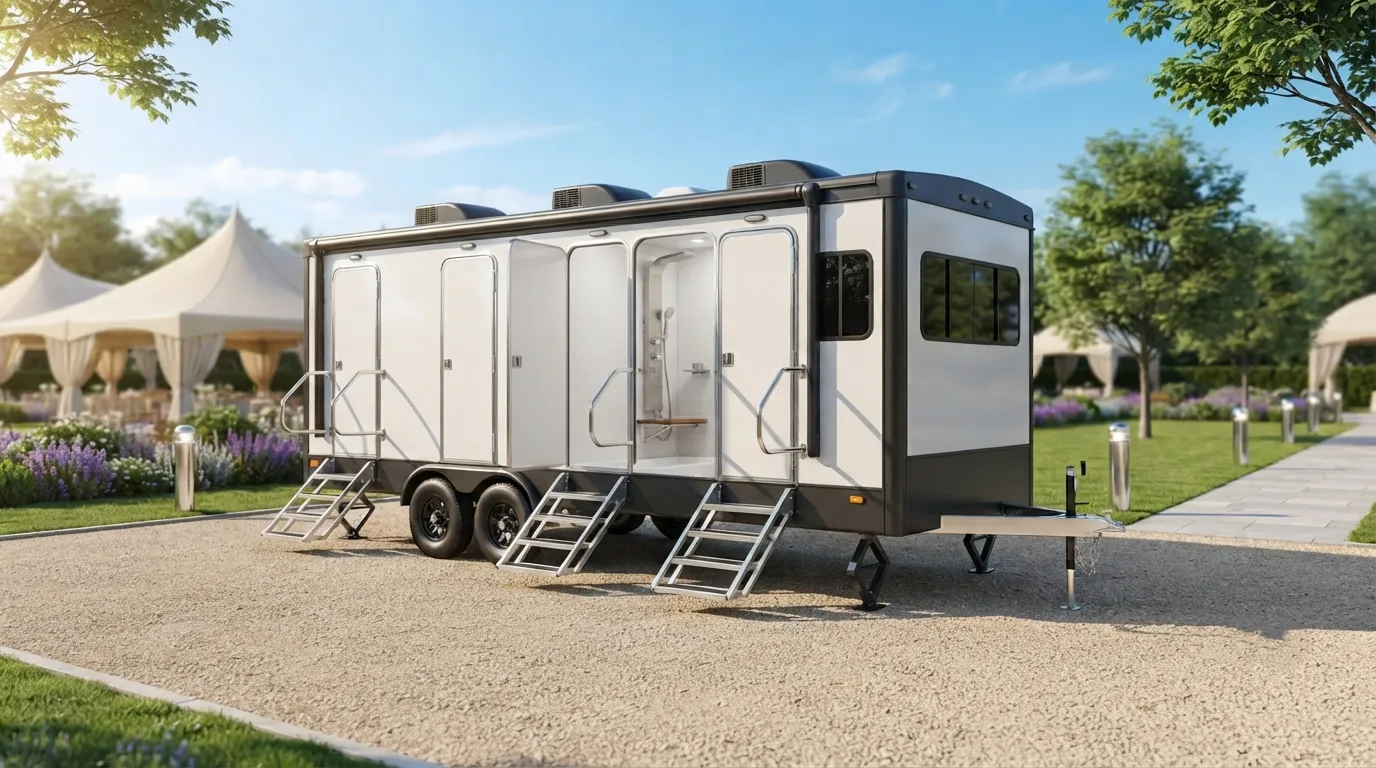
Handwashing station options and typical setup
| Setup | Best for | Meets 1910.141(d)(2)? |
|---|---|---|
| Portable sink, soap + towel dispenser | Construction, food service | Yes |
| Standalone hand sanitizer stand | Event entrances, supplemental use | No |
| Sink built into restroom trailer | Weddings, longer events | Yes |
A restroom trailer rental with a built-in sink handles both the toilet and the wash requirement in one unit, which is why we see more of them booked for weddings and corporate events around Arlington Heights each season. For a straightforward jobsite, a standalone portable sink rental next to your toilet bank is usually the cheaper, faster answer. Crews working within about 4 to 6 miles of the city, in Mount Prospect or Palatine, get the same setup on the same delivery run since both towns sit under 5 miles away.
Do I need a separate permit for a handwashing station?
Generally no, since it is not plumbed into a sewer connection, but placement in the right of way still needs city confirmation. Check our porta potty permit requirements page, and if you are also renting a dumpster, see dumpster permit requirements too.
How many handwashing stations does my crew need?
There is no fixed OSHA ratio for stations themselves outside 1928.110's farm rule. Match one station to each toilet cluster and follow how many porta potties do I need for the toilet count your crew size actually requires.
Can I rent just a handwashing station without a toilet?
Yes. Many kitchens, food trucks and paint crews rent sinks alone. Ask about a hand sanitizer station rental too if you just need a supplemental touchpoint near an entrance or line.
Does a restroom trailer include handwashing built in?
Most do. Our 2 stall restroom trailer and 4 stall restroom trailer both include sinks with soap and towels, satisfying 1910.141(d)(2) without a separate unit.
What is the difference between 1926.51(f)(1) and general handwashing?
1926.51(f)(1) only applies where paints, coatings, herbicides or insecticides are used. Everyday jobsite sanitation runs through 1926.51(c) instead, covering toilets and potable water generally.
Next step
Get a delivery date
Tell us the address, the dates and the headcount. We size the order and confirm the route.